
Scammers are taking photos and details from lost pet posts, posing as a local organization, and sending images that appear to be made with AI to ask for money. If you ever post that your dog or cat is missing, your own post can become the starting point for the scam.
You'll understand how this scam works, how to spot a fake photo, and what to do before paying anyone who claims to have your pet.
A fake photo and a $2,746 bill
A Florida family received a photo of their dog on an operating table, along with a demand for $2,746. The family suspects the image was made by a machine, using artificial intelligence. The unsettling part is that nobody hacked their phone or stole a password. All the scammers needed was the post the family shared to find their pet. A message meant to ask for help ended up becoming the raw material for the con.
Your lost pet post, in the wrong hands
When a dog or cat goes missing, most people post about it on Facebook, on Nextdoor, or in a neighborhood group, with a photo, the pet's name, and a phone number. That is exactly what scammers exploit. According to AARP, the US association for older adults, scammers monitor those groups and grab the details and photos you shared. With that information, the story they tell you later sounds believable, because it uses real details about your pet.

How the trap works, step by step
First, you post that your pet is missing, and they save the photo, the name, and your number. Then they call you pretending to be an organization in your area. They say your pet was found with serious injuries, or that you have to pay to get it back. To erase any doubt, they send a photo. Bill and Allison Cosens got one of their dog, Archer, on an operating table, which they later suspected was AI. According to AARP, scammers just take the photo from your post and create a new scene: your pet, but hurt or at a clinic.
An official warning came before Archer's case
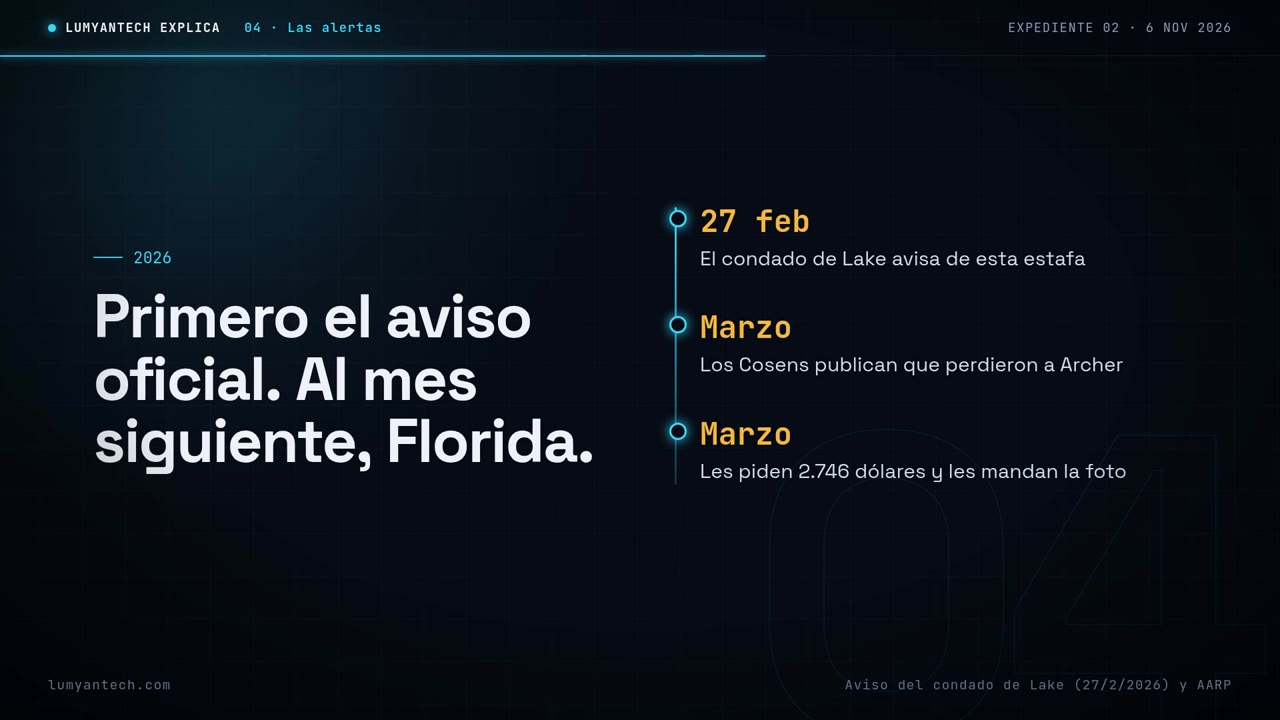
This scam was already on officials' radar. On February 27, 2026, Lake County issued an alert about it. The following month, in March, the Cosens, who live in Deltona, Florida, posted that Archer was missing. Soon after, the call and the photo arrived. What happened to them matches the pattern the county alert had described weeks earlier.
What's confirmed and what isn't
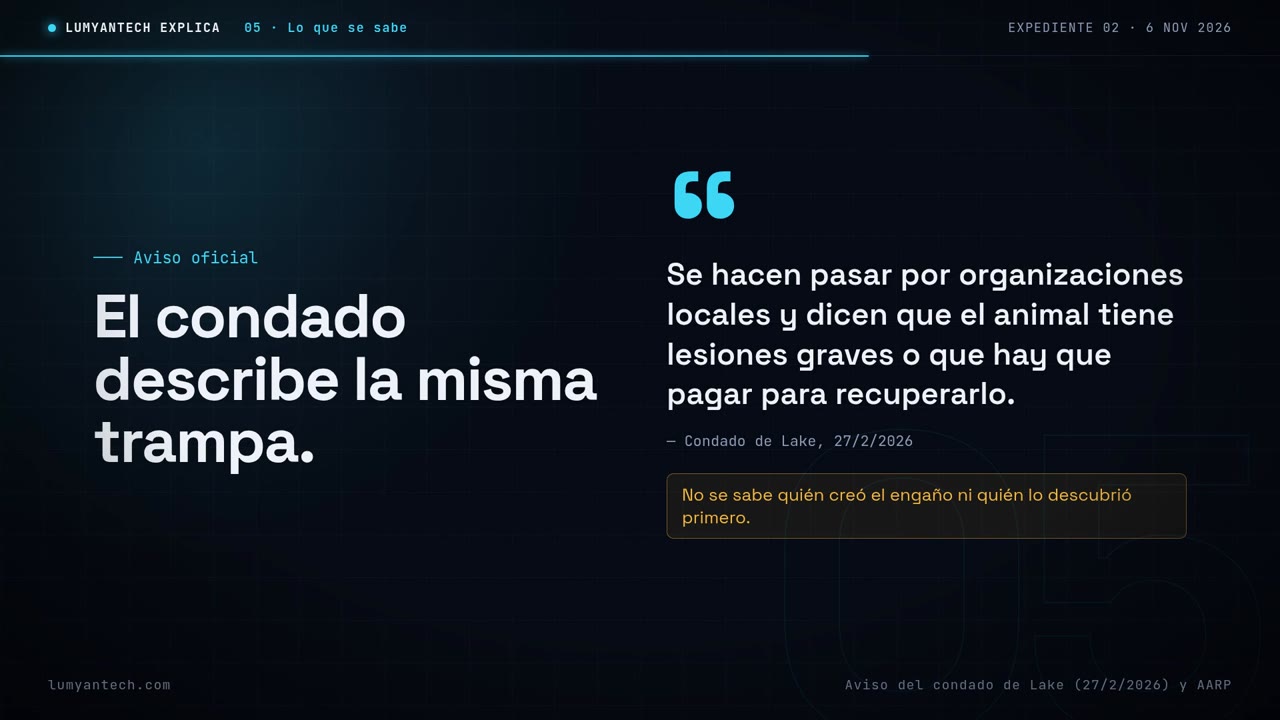
Lake County sums up the trap this way: scammers pose as local organizations and talk about serious injuries or a payment to get the animal back. It's the same story the Cosens lived through. What isn't known is who started this scam or who first spotted it. There's also no report that it affects any specific program, app, or device. This is a con aimed at people, not at technology.
Who's being targeted
No one has published how many people have fallen for this scam. But the target is clear: any owner who posted publicly about a missing pet and left their phone number, photos, or pet details in plain view. You don't have to be careless or bad with technology to be at risk. All it takes is doing what anyone would do to find their dog or cat: asking for help in public.
The clue that gives a fake photo away
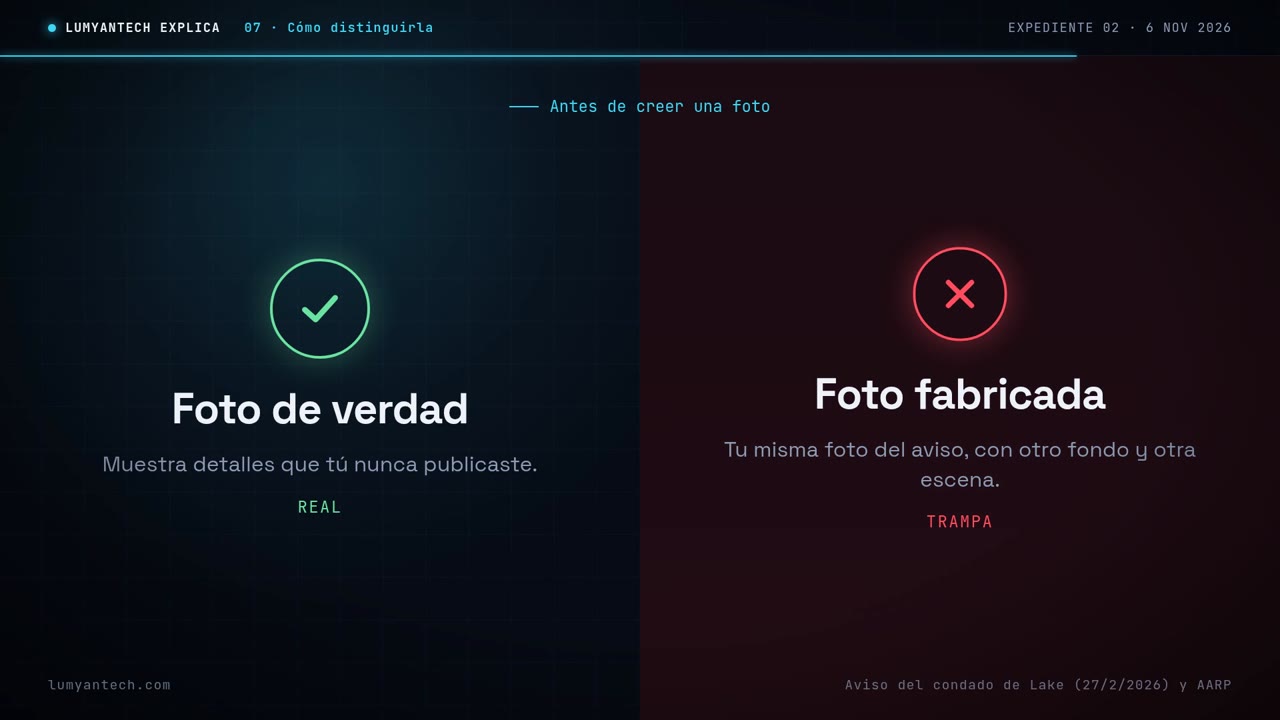
There's one sign you can check. If the photo they send shows your pet in the same pose as the one you posted, but in a different place, be suspicious. It may be your own image turned into a new scene. A photo taken today should show things you never shared. Before you believe what they tell you, calmly compare the image you received with the one in your post.
How to protect yourself if your pet goes missing
If your pet goes missing, these four rules will help you avoid getting scammed. None of them require any tech skills.
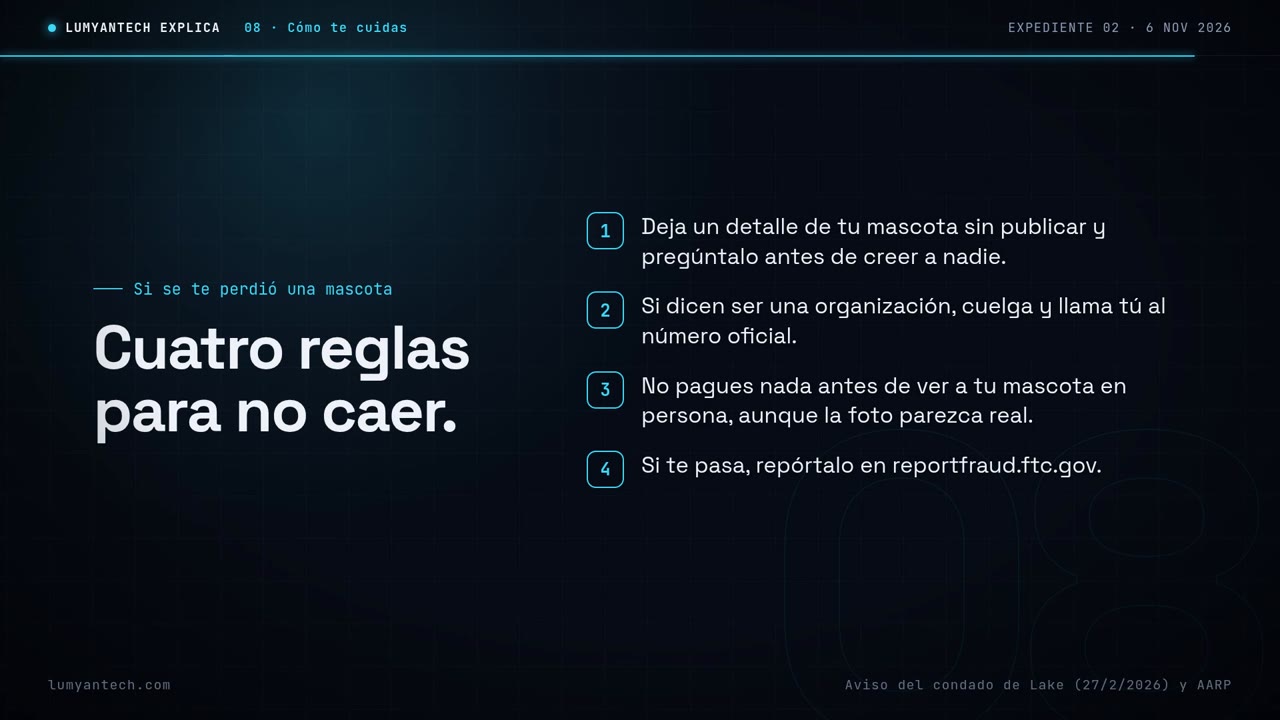
A convincing photo of your pet doesn't prove someone has it. Only seeing your pet in person does.
Sources
- content.govdelivery.com · content.govdelivery.com
- aarp.org · aarp.org
- aarp.org · aarp.org
- consumer.ftc.gov · consumer.ftc.gov
- wftv.com · wftv.com
Verified on November 11, 2026
Would you rather we handle it? Book a call